Energy Transition & Climate Change
Energy Challenge Days 2025
Collaboration for a Net-Zero Future

Marc Beckmann
Over four immersive days near Frankfurt am Main, 45 leaders and experts from across the clean-tech, finance, policy, and innovation spectrum came together for the Energy Challenge Days 2025, convened by the BMW Foundation. The goal: to turn bold ambition into tangible action to advance the energy transition.
The program focused on the BMW Foundation’s Challenge One: International Collaboration to Accelerate the Energy Transition. It cut straight to the heart of what’s needed right now: less talk, more coordination; less silos, more cross-sector synergy; and a shared understanding that innovation alone won’t cut it – we need a significant change in policy frameworks, financing and how we work together on an international scale.

Photo: Marc Beckmann
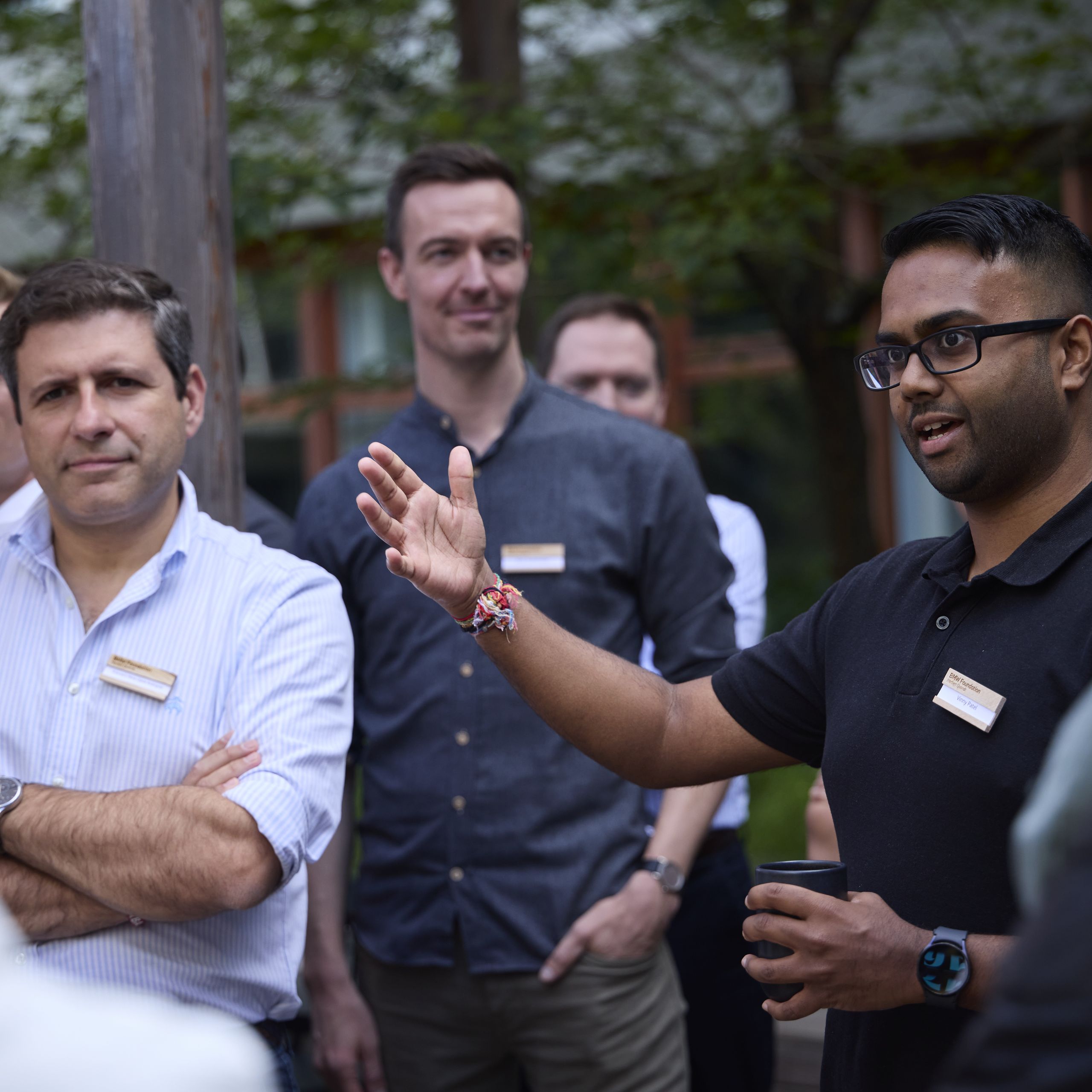
Photo: Marc Beckmann

Photo: Marc Beckmann
From Conversation to Collaboration: Mapping the Path Forward
The event kicked off with candid conversations about leadership, ambiguity, and scaling solutions. Sessions explored the invisible roadblocks to clean-tech deployment, the limits of current capital markets, and the human factor leading through ambiguity. As the days unfolded, something rare emerged: a group that went beyond networking, openly sharing their challenges alongside their superpowers, mapping out where collaboration could move the needle. And where the real barriers lie – such as bureaucratic hurdles, the lack of political frameworks, funding problems, or skepticism towards deep-tech innovations and change.From curated keynotes to hands-on strategy sessions and open space conversations, the program fused an honest approach with strategic foresight, while always anchoring in the question: What’s our next best move?
“Systemic change isn't a tech problem—it’s a leadership problem.”
CEO, SBTi

Beyond Networking: Where Strategy Meets Shared Purpose
The event brought together decision-makers and experts from a diverse array of organizations, including Breakthrough Energy, the European Commission, Nasdaq, Siemens Energy, and the International Finance Corporation (IFC). Innovators from cutting-edge startups connected with venture capital firms such as Vsquared Ventures, Liminal Capital, and Future Energy Ventures. Also in attendance were sustainability pioneers from The Earthshot Prize, Carbon13, and Planetary Intelligence. This cross-sector gathering created a dynamic exchange of ideas at the forefront of energy, climate innovation, and deep tech.
"We need the courage to fund moonshots—and the policies to back them up.”
Director of Strategic Initiatives at Nasdaq


Photo: Marc Beckmann
5 Key-Takeaways
1. Scaling Innovation Requires More Than Capital—It Demands Courageous Leadership Participants shared personal stories of growth, setbacks, and strategic pivots—highlighting that scaling transformative technologies is as much an emotional and organizational challenge as it is a financial one. The power of vulnerability, the willingness to let go of control, and the ability to lead through paradox were recurring themes. Systemic change is not primarily a technological challenge—it is a leadership challenge. 2. Capital Markets Must Evolve to Back the Long Game Today’s financial frameworks often reward short-term returns over long-term systemic impact. Leaders called for patient capital, public-private alignment, and new financial instruments that account for societal value, not just shareholder value. Regional funds, blended finance models, and family offices may hold part of the answer—but de-risking innovation must become the norm, not the exception. Participants highlighted the need for a kind of “BlackRock” investment company equivalent, focused on impact-driven, small-scale investments, along with a broader mindset shift toward mission-aligned investing.3. Breakthrough Innovation Needs Systemic Support Europe boasts world-class research—but many technologies still die in the lab. Participants highlighted the need for entrepreneurial pathways within academia, stronger incentives for industry-startup collaboration, and regulatory frameworks that support—not stall—breakthroughs. Funding moonshot innovations requires courage and must be supported by the right policy frameworks to enable their success. 4. Industrial Decarbonization Is a Trust-Building Exercise Scaling clean tech inside legacy industries means breaking silos, aligning internal incentives, and proving that change is both doable and profitable. It also means building trust between startups and corporates—fast. The workshops emphasized structured partnerships and public-private models to bring first-of-a-kind projects to life at scale. 5. The Energy Transition Is Social, Not Just Technical Geopolitics, democracy, and societal cohesion were not side conversations—they were central. If the energy transition is to succeed, it must be inclusive, decentralized, and rooted in democratic legitimacy. Participants stressed the need to lead systemically, communicate clearly, and ensure that no one is left behind in the race to net zero. As several participants emphasized, the energy transition must be rooted in social inclusion, because without the people, the transition won’t happen—and innovation without inclusion won’t stick.
Questions? Contact us.

BMW Foundation Team